
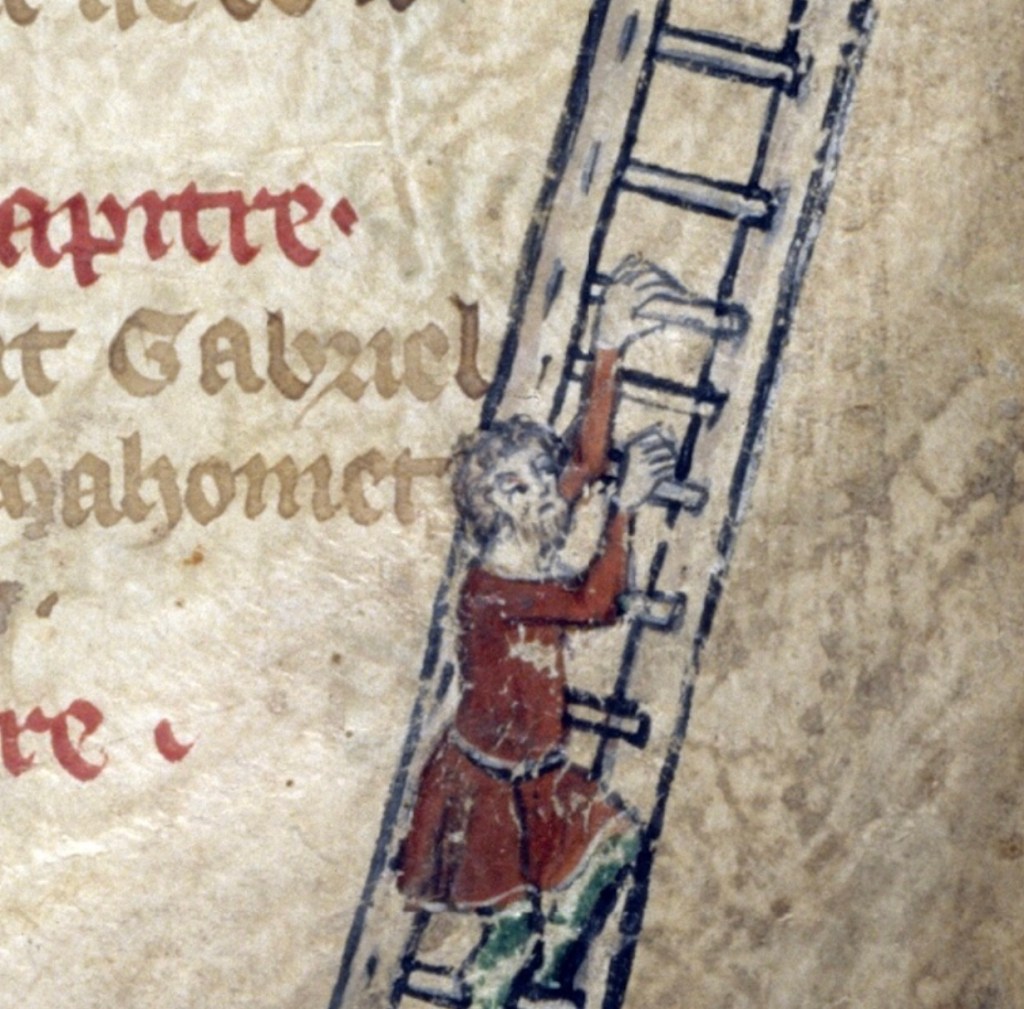
In the Purgatory of Appreciation and Criticism: The Perception of Islam in Dante
The rapid expansion of Islam over a vast geographical area within its first century posed a perplexing challenge for the Christian world. This phenomenon was initially perceived as a manifestation of divine wrath against those who neglected religious mandates. Primarily, Islam was viewed as a military threat that required elimination. Early encounters, as noted by John Tolan, led to the belief that Islam could be disregarded as a scholarly concern. Subsequently, apologetic reactions characterized it as a Christological heresy. Islam, assumed to be a blend of Jewish and Christian elements, was not acknowledged as a bearer of new revelation or theology.
It was only a few centuries later that the Christian world had to confront the irreversible spread of Islam (Tolan, 2002, p. 67). This confrontation evolved into an intellectual realization, necessitating the study of Islam. Particularly, the development of defense literature through the critique of the Qur’an’s claims against Christian teachings marked a significant shift. This literature gained a new dimension with translations from Arabic, enabling the transfer of philosophical knowledge from Muslim thinkers to Latin culture. This transfer facilitated the transition from apologetics to theology.
The elucidation of basic principles of faith, along with the adaptation of ancient philosophical systems, ushered in a new phase of theological explanation. This phase aimed to address and counter the criticisms posed by Islam, thus enriching the intellectual and theological landscape of the Christian world.
An important figure in this intellectual transition was Peter Venerabilis (d. 1165). Peter recognized the confusion in defining Muslims, oscillating between heresy and infidelity. The failure of the Crusades, the intense cultural interaction with Andalusia, and the Franciscan mission to North Africa further complicated the definition and interest in Islam. Christian scholars, caught between influence and criticism, generally focused on four main issues:
(I) Religious Explanation of Muslim Conquests and Strategies for Victory: How to religiously explain the Muslim takeover of Christian cities and strategies to achieve victory against them. The Crusades reflected a militarist doctrine, while debates about the nature of Christianity emerged around the Reconquista and missionary work as alternatives.
(II) Responses to Islam’s Criticism of Christianity: Studies focused on how to respond to Islam’s criticism of other faiths and the challenge of reintroducing the Christian message to Islamized communities.
(III) Combating Criticisms from Islamic Sources and Christian Heresies Influenced by Islam: Efforts to combat criticisms of the Christian faith from Islamic sources and the heresies that emerged in Europe under Islamic influence. This included justifying the Inquisition as a reaction to these criticisms.
(IV) Addressing the Latinization of Ancient Knowledge and Intellectual Shifts: Measures against the Latinization of ancient knowledge and culture. As Jacques Le Goff points out, this involved the intellectual shift towards Arabic translations, the purge of Averroism from universities, and the development of Thomist theology as a response to the need for a new theological system.
These focal points illustrate the complex and multifaceted engagement of Christian scholars with Islam. They navigated between military, theological, and intellectual challenges, striving to reconcile their faith with the realities of a rapidly changing world.
These factors significantly diversified research interest in Islam during the late Middle Ages. It became clear that treating Islam merely as a heretical sect emerging from Christian history was inadequate. A multidimensional understanding of Islam was necessary, encompassing critiques of its beliefs and philosophical issues, and this need engaged Western thinkers for many centuries.
The emergence of Arabic education in universities, translation activities in some monasteries, the purification of art faculties from philosophers, military measures, and intensive missionary work were various reflections of this multifaceted approach. Medieval thinkers’ relationships with Islam were often characterized by their alignment with different attitudes, but exposure to various aspects of Islamic civilization led to a wide range of approaches.
Foremost among these thinkers was Dante, whose engagement with Islam is notable both for the diversity of his sources and the breadth of his interpretations. Dante’s work illustrates the complex and nuanced ways in which medieval scholars could interact with and understand the Islamic world. His Divine Comedy, for instance, reflects a deep engagement with Islamic thought and literature, revealing both his intellectual curiosity and the broader cultural exchanges of his time.
Islamic Sources of Dante
The claim that Dante wrote his works influenced by Islamic sources was first proposed by Blochet in 1901. Blochet argued that the ascension narratives, rooted in Indian and Persian legends, were transmitted to the Latin world through Arabic literature. This notion gained further attention when Palacios published Escatología musulmana y la Divina Comedia in 1919, a work that sparked significant controversy among scholars of both Orientalism and the history of Western thought and literature.
Palacios posited that Dante was influenced by Ibn Masarra, whom he associated with the Neo-Platonist tradition, and by Ibn ‘Arabi, particularly in the narrative of Beatrice’s ascension to Paradise. Ibn ‘Arabi emphasized the allegorical aspect of the Prophet’s Isra and Mi’raj journey, suggesting that Dante might have been inspired by this approach, viewing the apparent narrative as rooted in immanent wisdom. Despite initial skepticism from many historians of thought, Palacios elaborated on his thesis in 1924 with Historia y crítica de una polémica, detailing his research journey. Subsequent research by Palacios expanded the understanding of Dante’s relationship with Islamic literature, suggesting a much broader influence.
Dante’s primary Islamic source was likely the Qur’an, and he probably studied translations made in Spain by Robert of Ketton in 1143 and Mark of Toledo in 1210, both under the patronage of Peter Venerabilis. Riccoldo da Monte di Croce, who returned to Florence in 1300 after an extended stay in Syria and Iraq, had extensive knowledge of Qur’anic exegesis. Dante was aware of Riccoldo’s works Liber peregrinationis, which described his travels, and Contra legem Sarracenorum, a critique of the Qur’an’s teachings. Notably, similarities have been identified between expressions in Contra legem Sarracenorum on miracles and descriptions in Dante’s Divine Comedy. This intricate web of influences highlights the profound impact of Islamic thought on Dante’s works. Dante’s engagement with these sources reflects a broader intellectual milieu in which cross-cultural exchanges significantly shaped medieval European thought.
The main source of the ascension narrative for medieval Christian thinkers is ‘Abd al-Karīm al-Qushayrī’s Kitāb al-mi’raj, which interprets the Prophet Muhammad’s mi’raj within a mystical framework. This work was first translated into Spanish by Abraham Alfaquim and later into Latin and French by Bonaventura in 1264 under the title Liber Scale Machometi. The Libro del paraíso y del infierno, a summary of Kitāb al-mi’raj, was widely read and even presented to Pope Nicholas IV (d. 1292), who had a special interest in Islam.
Brunetto Latini, one of Dante’s teachers, met Bonaventura during his stay in Toledo. Through this connection, Brunetto likely introduced the Liber Scale to his students, along with other translations of Islamic philosophy he encountered. Contemporary scholarship notes numerous similarities between the Divine Comedy and the Liber Scale: descriptions of hell’s various torments, walls of fire, and deep ditches are common images in both works. More fundamentally, the Divine Comedy seems inspired by the mystical style of the Kitāb al-mi’raj: apparent sufferings in the narrative have underlying causes, and each sin committed in the world is met with a corresponding punishment.
The influence of Ibn ‘Arabi on Dante, as suggested by Palacios, is more challenging to substantiate. To date, no direct translations of Ibn ‘Arabi’s works have been identified. While it is essential to acknowledge the role of oral transmission in cultural exchange, scientific explanations for the continuity of oral sources are difficult to establish. This gap necessitates examining the potential influence of mystical literature on Dante’s critique of philosophy mentioned earlier.
Considering this, we must explore the possibility that Dante’s philosophical and theological perspectives were shaped by mystical literature. Mystical frameworks often critique rationalist philosophy by emphasizing the limitations of human reason and the necessity of spiritual insight. This critique aligns with Dante’s integration of mystical elements and moral allegory in the Divine Comedy. The poem’s portrayal of the soul’s journey through Hell, Purgatory, and Paradise reflects an understanding of divine justice and the moral order that transcends purely philosophical reasoning, suggesting that mystical literature significantly influenced Dante’s work. In summary, the influence of Islamic sources on Dante is multifaceted, encompassing translated texts and possible oral traditions. The similarities between the Divine Comedy and Islamic mystical narratives highlight the profound impact of these sources on Dante’s literary and philosophical framework.
Depiction of the Prophet in the Comedy
The depiction of the Prophet Muhammad in Dante’s Inferno is a perplexing contradiction, reflecting the complex and often contradictory attitudes of medieval intellectuals towards Islam. These attitudes were marked by a lack of institutional authority and varied significantly across scholars, philosophers, and Sufis, making it difficult to approach Islam with a single, coherent definition. Dante himself was not immune to this uncertainty.
In Inferno, Dante not only includes members of different faiths but also individuals who held honorable positions in Christian history, including Popes. In Canto XXVIII, he directly addresses those who sowed the seeds of religious controversy. Here, Virgil and Dante encounter the Prophet Muhammad and Ali. The Prophet Muhammad’s punishment is depicted as the splitting of his chest, a scene inspired by Islamic history. The opening and expanding of the Prophet’s chest, described in siyar texts as a spiritual preparation for revelation, is inverted by Dante. The event of inshirah, which is seen as a sign of the Prophet’s spiritual elevation in Islam, is carnivalesquely portrayed as a punishment in the afterlife. Dante interprets this spiritual preparation as leading to sedition and division among the faithful, rendering it a contrapasso where an event that conferred honor in the world becomes a source of torment in the hereafter (Inferno, XXVIII, 142).
In designing this scene, Dante incorporates elements from al-Qushayrī’s Kitāb al-mi’raj and Bonaventura’s interpretations. He reflects a conversation from Kitāb al-mi’raj where, at one of the stops of the miraculous journey, the Prophet is confronted with wounded bodies and Gabriel tells him that their offence is to “sow discord among men” (qui verba seminant ut mittant discordiam inter gentes). Dante uses the term seminator (sower) to accuse the Prophet of sowing discord, blending Islamic and Christian narrative elements to create a unique critique.
Dante appears to have drawn basic motifs for the Divine Comedy from Qushayri’s account of the mi’raj and Bonaventura’s interpretations, but he places the Prophet Muhammad in Hell to imply that the Prophet of Islam, who claims to finalize religion, has not yet completed his own spiritual ascent. This stance suggests that, for Dante, the offence of Islam is not unbelief but a kind of heresy that disrupts religious unity.
In Christian thought, this accusation against the Prophet Muhammad echoes the criticism of Arianism. In the early fourth century, North African Christian scholar Arius criticized fundamental Catholic dogmas, such as the Trinity and the Incarnation, which was seen as an attempt to disrupt the unity of the Church. Although condemned in Alexandria and Nicaea, Arius was not expelled from Christianity. In Canto XIII of the Paradiso, Thomas Aquinas warns against rash judgments in religious thought, referring to the Arians, according to commentators. Heterodoxy in history often arises from differences in understanding and interpreting sacred faith rather than outright denial. Thus, both Arius and Muhammad, who damaged the unity of religious tradition, had similar impacts in Dante’s view. Dante also includes Ali, indicating that he sees the schism within the Islamic world as part of a larger religious schism.
This complex portrayal underscores the intricate and often contradictory ways medieval Christian scholars engaged with Islam. While Dante’s Divine Comedy reflects these tensions, it also highlights the broader cultural exchanges that shaped medieval thought and literature.
* * *
On one hand, the Divine Comedy reveals a clear influence from a diversity of Islamic sources; on the other, it contains a scene depicting the Prophet Muhammad in Hell. This contradiction reflects the complex interplay of medieval Christian marginalization of Islam with an intellectual engagement with Muslim thinkers. Such a dilemma, evident in the Divine Comedy, characterizes Western intellectuals’ attempts to understand Islam from the Middle Ages through the Renaissance and into the age of Colonialism. They would separate Muslim philosophers like Ibn Sina from the continuity of Islamic history, utilize Sufi sources such as al-Qushayri while avoiding direct references, admire heroes like Saladin, and simultaneously insult the Prophet Muhammad. This paradoxical journey of the medieval intellectual is reflected in Dante’s work.
The Divine Comedy functions as a prism built on an intricate mathematical network where contradictions reflect and interplay with each other. Evaluating each canto requires considering the book in its entirety, interpreting it in conjunction with parallel cantos in the other books. In Inferno, Purgatorio, and Paradiso, the subjects, characters, and metaphors reflect and inform each other. Beyond a linear progression, the cantos open windows to each other, creating a multidimensional narrative structure.
From this perspective, religious traditions and institutions are seen as earthly reflections of divine wisdom, positioned between Hell and Purgatory. These institutions, like philosophical schools, are portrayed as insufficient for the soul’s ascension. This viewpoint echoes the dominant thought among the knightly orders returning from their eastern journeys. Although these new formations distanced themselves from religious authorities, they sought a synthesis of philosophy and religious thought, bringing together the mind and heart. The Divine Comedy can be interpreted within this framework, where Dante expresses the wisdom of existence through folk language and poetry.
Dante’s work transcends scholastic fictions, directing the mind towards the divine source through an itinerarium mentis in Deum (journey of the mind to God). This journey is illuminated by the inner light of the spirit, requiring no external correlation. It leads to the realization of a passage from multiplicity to unity, from mortality to eternity, and ultimately from Hell to Heaven. This realization of opposites cannot be fully explained by philosophy or theology but can be experienced through poetry. Poetry, like revelation, travels through all layers of expression and existence.
In the Divine Comedy, Dante wrestles with the contradictions inherent in the medieval Christian understanding of Islam. His engagement with Islamic sources, despite the marginalized view of Islam in his time, highlights the complex and often contradictory nature of medieval intellectual discourse. Dante’s work reflects a journey of reconciliation between conflicting ideas, achieved through the transcendent medium of poetry. This journey illustrates a broader historical pattern of Western intellectuals grappling with the multifaceted legacy of Islamic thought, a pattern that continues to evolve through subsequent historical periods.
Further Readings
To deepen understanding of the complex relationship between Dante, medieval European intellectuals, and Islam:
John V. Tolan, Saracens: Islam in the Medieval European Imagination, 2002.
This book provides a comprehensive examination of how medieval Europeans perceived Islam and Muslims. Tolan explores the sources of these perceptions and their implications for European identity and thought.
Brenda Deen Schildgen, Dante and the Orient, 2002.
Schildgen’s work focuses on Dante’s engagement with Eastern cultures, including Islamic influences. She delves into the historical and cultural contexts that shaped Dante’s views and representations of the Orient.
Jan M. Ziolkowski (ed.), Dante and Islam, 2014.
This edited volume brings together essays from various scholars exploring different aspects of Dante’s relationship with Islam. It covers theological, philosophical, and literary influences, providing a multifaceted perspective on the subject.
Benjamin Kedar, Crusade and Mission: European Approaches toward the Muslims, 1984.
Kedar examines the different strategies employed by Europeans in their interactions with Muslims during the Crusades. The book discusses both militant and missionary approaches, offering insights into the medieval mindset.
M. Frassetto (ed.), Western Views of Islam in Medieval and Early Modern Europe, 1999.
This collection of essays examines the various ways in which Western thinkers from the medieval to early modern periods understood and portrayed Islam. It highlights the diversity and evolution of Western attitudes towards Islam over time.

 Selman Dilek
Leave a comment