
Whoever speaks about the reactions of Islamic thought to Western influence is reminded of Heidegger’s description of the wooden sword when asked about the philosophy of religion. The crisis in searching for answers to fundamental questions of post-Enlightenment philosophy concerning traditional religious concepts resembles the situation of a man who wants to grasp a sword in a duel but only possesses a wooden one because he is a carpenter. It is undoubtedly a crisis arising from the difficulty religious thought faces in understanding the modern paradigm shift, from its philosophical foundations to its political perspectives, within the conceptual framework of its own intellectual tradition. The fact that Islamic thought is confronted with questions that come from outside rather than from its own past is not easy to overcome, as the crisis faced by Muslim theologians when the ancient Greek heritage was translated into Arabic shows. The disputes within the core of theology, stemming from controversies in ancient Greek antiquity, led to disagreements about how to understand the divine word. After the Enlightenment, religious ways of thinking were subjected to intense and continuous scrutiny.
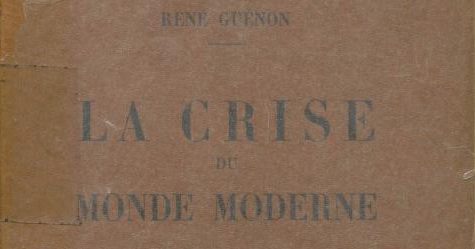
In light of the profound and transformative impact emanating from philosophy and the new sciences that arose from it, there are vastly different approaches to the Western experience from various perspectives. Foremost among these is the complete elimination of the conceptual and thematic influence of Western philosophy on Islamic thought. The traditionalist school, ranging from René Guénon through Frithjof Schuon and Martin Lings to Hossein Nasr, is one of the most significant currents in contemporary Islamic thought. Since the founders have both a Western background and education in Islamic countries, possessing a broad spectrum of knowledge from both worlds, many educated Muslims today will come into contact with them in one way or another. This is evident in translated works into Arabic, Turkish, and other languages of Muslim countries. Traditionalism allows for a Sufi-oriented reading of history and religious sciences on the one hand. On the other hand, it also provides an explanation for the upheavals caused by the West in recent centuries. In this regard, traditionalism is seen by many Muslim thinkers as a safe harbor, as it enables both the defense of their own history and criticism of the West. It is also possible to trace the influence of traditionalism on Muslims living in Europe: Guénon’s La Crise du monde moderne, Schuon’s The Transcendent Unity of Religions, or Nasr’s The Spiritual Crisis of Modern Man, especially in the hands of young people. However, it is important to recognize the challenges traditionalism faces in relation to Islamic theology and its contradictions concerning its critique of the West. I believe that in the search for a new Islamic way of thinking in Europe, particularly concerning its own cultural conditions, the weaknesses of traditionalism should be considered as much as its advantages. This article questions whether the critique of modernity by traditionalism is based on a solid theological foundation within the framework of the concepts of tradition and wisdom and the understanding of history developed in this direction.
Conceptual Ambiguities and Theological Inadequacies
Traditionalism has its origins in the Christian faith, yet this origin is almost entirely ignored in Islamic literature. Particularly in the 19th century, when rationalism dominated all intellectual horizons, (Catholic) theologians began to defend it, emphasizing the superiority of revealed knowledge. This is because the concept of tradition plays a significant role in the history of Christianity, a fact that many traditionalists overlook. The three pillars of transmitting the Christian faith—doctrine, theology, and tradition—are conceptually overlapping ideas, primarily concerning the embodiment of divine revelation and its continuity throughout history. Doctrine is the exposition of the principles of faith, such as the unity or the Trinity, and the consolidation of the diversity of these expositions within the Church constitutes (sacramental) theology. Tradition is what preserves the cognitive and spiritual unity of doctrine in the transmission of revelation from the apostles to the Church, the monastery, and eventually the university. For this reason, Christian doctrine is also tradition, expressing transmission and maintaining the unity of knowledge, faith, and action across generations. It is the continuous influence of the Holy Spirit on individuals and societies that ensures the persistence of tradition in history (it should be noted that this very understanding enabled the emergence of modern philosophy of history). In this context, it should be considered that the assertion by traditionalists that divine truth is at the center of all religions appears to be a version of the Christian claim that the Holy Spirit is at the center of history. Lord Northbourne describes tradition in his work Religion in the Modern World (London 1963, 34) as a reflection and even a continuation of revelation. But to what extent can this concept of revelation with its Christian background be used in Islamic thought?
In the history of Islam, there are many different understandings of revelation, with traditionalists who recognize this focusing almost exclusively on Sufism. In the mysticism of unity, revelation is not only the word of God but also His manifestations throughout creation, which represent the word of God. Thus, the concept of a transhistorical tradition gains significance. What is essentially a single idea of wisdom, transmitted in various communities with different faith orientations, can be seen as different manifestations of divine revelation. Ibn al-’Arabī and his followers are aware that other religious communities have also experienced divine revelations and were thus able to attain the truth in different ways. However, tradition implies continuity. Whether this can be directly attributed to Sufism is a matter of discussion. As a reader of Ibn al-’Arabī, such an interpretation seems appropriate to me, but it cannot be said that this is a direct claim of Ibn al-’Arabī. It is important to note that this interpretation is only possible for a part of Islam and does not represent all of Sufism or even the Kalam-science (theology) in general. It remains unclear which religions or schools are meant when we speak of the tradition of wisdom at the core of each faith.
Another question is to what extent the wisdom teachings (al-hikmat al-muta’āliyah), a fundamental understanding of traditionalism, can be understood in an Islamic context. Although the term has roots in the Renaissance, it can be traced back to the early Christian Fathers, who recognized the same divine effect in both Jesus and Plato. Although the divine appears in different forms, it is essentially one in each form. This ontology of the unity of being is already known to us from medieval mysticism. There is a divine principle in the truth of all things, but they differ in their manifestations. However, the traditionalists are not satisfied with the ontological unity and claim that the epistemic orientations are also unified in their truth. It is not easy for either Muslim or Christian thinkers to justify the claim of epistemic unity. Scholars like al-Ghazali, who advocated the doctrine of unity and manifestation and bridged the gap between dogmatic theology and Sufism, were far from the question of the unity of different religious beliefs and knowledge. Or Nostra Aetate, which was written in a modern context, does not speak of unity but emphasizes that there is a trace of truth in the various faiths. It is one thing to postulate the ontological unity of being, and another to postulate the unity of faith. Therefore, traditionalism must have a distinctly different orientation from mystical theologies. However, I do not want to draw attention to this theological distance here, but rather to the fact that traditionalism falls into a form of ontological dualism, which in my opinion contradicts the teachings of divine unity.
A Dualistic Theology of History
The traditional view of history focuses on the course of tradition, in which divine wisdom is reflected: The doctrine of divine unity resonates in all societies of past eras and forms the core of all religions. However, in modernity, tradition is lost: If divinity continually manifests itself in history, the question arises as to why a later part of history is deprived of it. This problem is directly related to divine being and divine attributes when we consider it within the framework of the science of Kalam. The reason for this is that divinity cannot be confined to a specific time or space. Alternatively, it could be balanced by another divine power that is just as effective as the first. The former would be a limitation of God to creatureliness, while the latter would be a kind of multiplication of divine powers. It is not clear which image of God traditionalism manifested in one period of history but not in another.
From Ibn al-ʿArabī’s perspective, let’s pose another question: Do divine manifestations occur collectively, or do they happen through an alignment within the individual? Even if the pagan has an orientation towards the divine within him (which does not mean it is righteous), why is the modern man deprived of this orientation? It becomes evident that the traditionalists have clear contradictions with Ibn al-ʿArabī, despite strongly emphasizing him and deriving from him. For Ibn al-ʿArabī, it is unacceptable for the manifestation or its absence to be interrupted in a society. First, the manifestation of the divine occurs in the heart of every person, and secondly, everyone becomes divine in their own way within, even the modern man, despite all his antispirituality. The traditionalists consider the modern “curse” a reflection of God’s wrath and thus adapt the appearances of God’s Jamal (beauty) and Jalal (majesty) in history. Hardly any Sufi, including Ibn al-ʿArabī, has tried to construct a theology of history from the manifestations of God in the form of mercy and violence. Rather, they were interested in interpreting individual sensations of these manifestations. In tasawwuf, Jamal and Jalal are intertwined and follow each other. They are experienced in individual insights, not in collective spheres. For this reason, the traditionalist dualism is more reminiscent of Manichaeism than Sufism.
Traditionalism differs from Islamic theological schools in its concept of God and makes some ambiguous claims regarding the understanding of history. Although a kind of glorification of the past may appeal to the religious in connection with criticism of the West, some clear questions must be considered. When recalling all the political and social problems of past eras, it becomes evident that there was no form of divinity in the past. Like people today, medieval people could act within the created sphere. Augustine in the face of the sins of the Romans or Rumi regarding the massacres of the Mongols: when evaluating modernity, we must remember the difficult burden of the past. It is evident that certain problems arose in connection with modernity, but humanity also achieved crucial accomplishments: it opened economic systems, social classes, discrimination, etc., to intellectual debates. No sin belongs exclusively to modernity, and no era is permanently cursed.
Traditionalism involves theological difficulties regarding the critique of modernity and the understanding of past ages and their relationship to the divine. This way of thinking already presents an open problem in considering an era as a whole. Modern society is characterized by diversity. Individuals are not homogeneous products of a unified factory but are distinguished by their individual characteristics. According to the Islamic concept of Fitrah, each person cannot be uniform and purely material, as each person is divinely endowed by their humanity. They were created to feel divine mercy and love in every situation. Neither history nor the future can be the scene of a divine absolute. We need not fall into this kind of juxtaposition of history and present; the glorification of history and the defamation of the present complicate the connection to current reality. From my perspective, it is impossible to understand today’s world with exclusionary approaches and to change it for the better. In particular, the reality as it is cannot be understood as a kind of dichotomy between Islam and the West. One cannot grasp reality if one completely rejects all the cultivation that has taken place over the past centuries.

 Selman Dilek
Leave a comment